Unprecedented bird-strike risk: Opinion paper submitted on wind power project in Ishikari, Hokkaido
2026.4.22
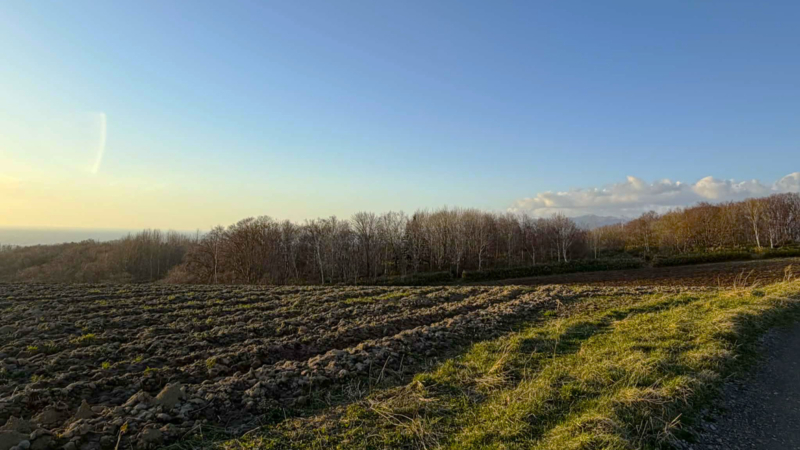
Photo courtesy of Kunio SASAKI
- The Nature Conservation Society of Japan (NACS-J) has submitted an opinion paper on the Environmental Impact Assessment Report for “Hokkaido Atsuta Wind Power Project (tentative)”.
- The risk of bird strikes (fatal collisions) to White-tailed Eagles (Haliaeetus albicilla) in this project is remarkably high among all wind power projects in Japan, raising serious concerns about irreversible damage to natural environment.
- The planned site falls within the area designated as an “Environmental Conservation Priority Area” under the wind power zoning plan by Ishikari City.
- Although the project is described as “achievement of Nature Positive”, in substance, it must be considered “greenwashing”.Given these factors, NACS-J strongly calls for a fundamental review, including potentially cancelling the project.
The Nature Conservation Society of Japan (NACS-J; Chair: TSUCHIYA Toshiyuki) has submitted the opinion paper on the proposed Hokkaido Atsuta Wind Power Project (developer: Tokyu Land Corporation; maximum capacity: 64,500 kW; number of turbines: approximately 15) in response to its Environmental Impact Assessment Report (hereafter “Draft EIA”, prepared by Japan Weather Association). The opinion paper strongly calls for a fundamental review of the project, including cancellation, because it could cause severe impacts on White-tailed Eagle and other endangered raptors.
In order to truly achieve “the simultaneous realization of carbon neutrality and nature positivity” advocated by the developer, it is essential to respect the views of the local community and give top priority to avoiding negative impacts on biodiversity, particularly on rare bird species within the project area. NACS-J strongly requests a comprehensive revision of this project.
Read the opinion paper here (Japanese only)Key Points of the Opinion Paper
1. The collision risk to White-tailed Eagle is higher than ever before
The White-tailed Eagle (Vulnerable, VU on Japan's national Red List), the Oriental Honey-buzzard (Near Threatened, NT on Japan's national Red List), and other endangered raptors are confirmed to inhabit and fly in the project area. According to the draft EIA, the collision probability of White-tailed Eagles with wind turbine blades and other related structures is extremely high, specifically 10 to 24 times higher than the standard benchmark. This rate is even higher than that of Hamasato Wind Farm (Horonobe, Hokkaido), which was forced to shut down due to frequent bird strikes shortly after it began operations. Therefore, similarly serious or even worse bird-strike incidents are extremely likely to occur at the Atsuta project.
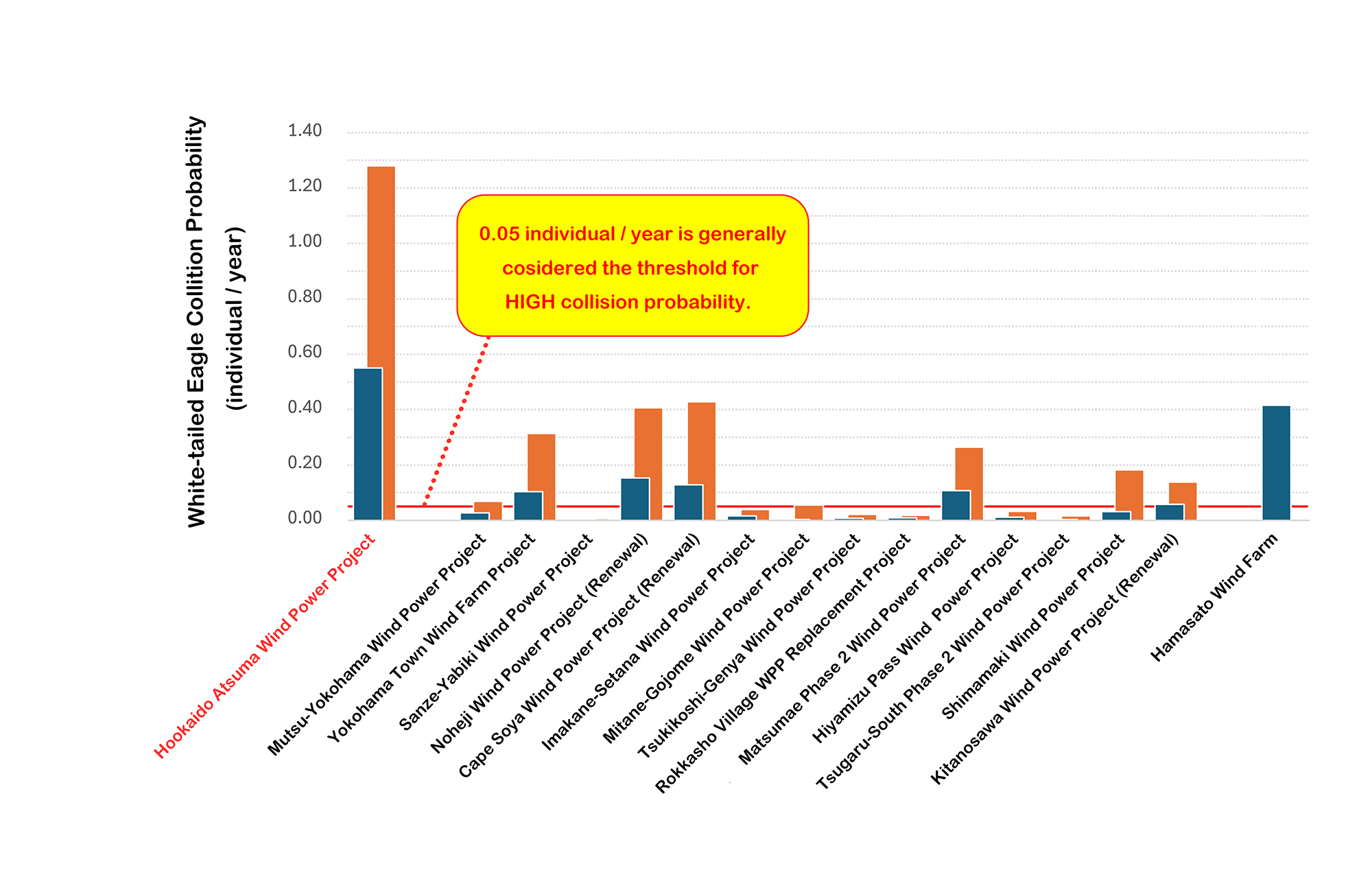
Figure: Collision rate for White-tailed Eagle, indicated in EIA documents (Draft and Final EIA) of projects where the flying of White-tailed Eagle has been confirmed within the project area in recent years. (Click to enlarge)
The figure compares the collision rate in 15 projects (including Atsuma project). EIA documents of each project were submitted after 2024, except Hamasato Wind Farm, its Final EIA was submitted in 2019 (only shown for MOE: Ministry of the Environment model). Hamasato Wind Farm has suspended its daytime operation since January 2026, following mass bird-strike including White-tailed Eagles, and the suspension continues as of April 2026. Collision rate for Atsuta project is remarkably higher than any other project.
Table: Collision rate for White-tailed Eagles, indicated in EIA documents (Draft and Final EIA) of projects where the flying of White-tailed Eagles has been confirmed within the project area in recent years. (Click to enlarge)
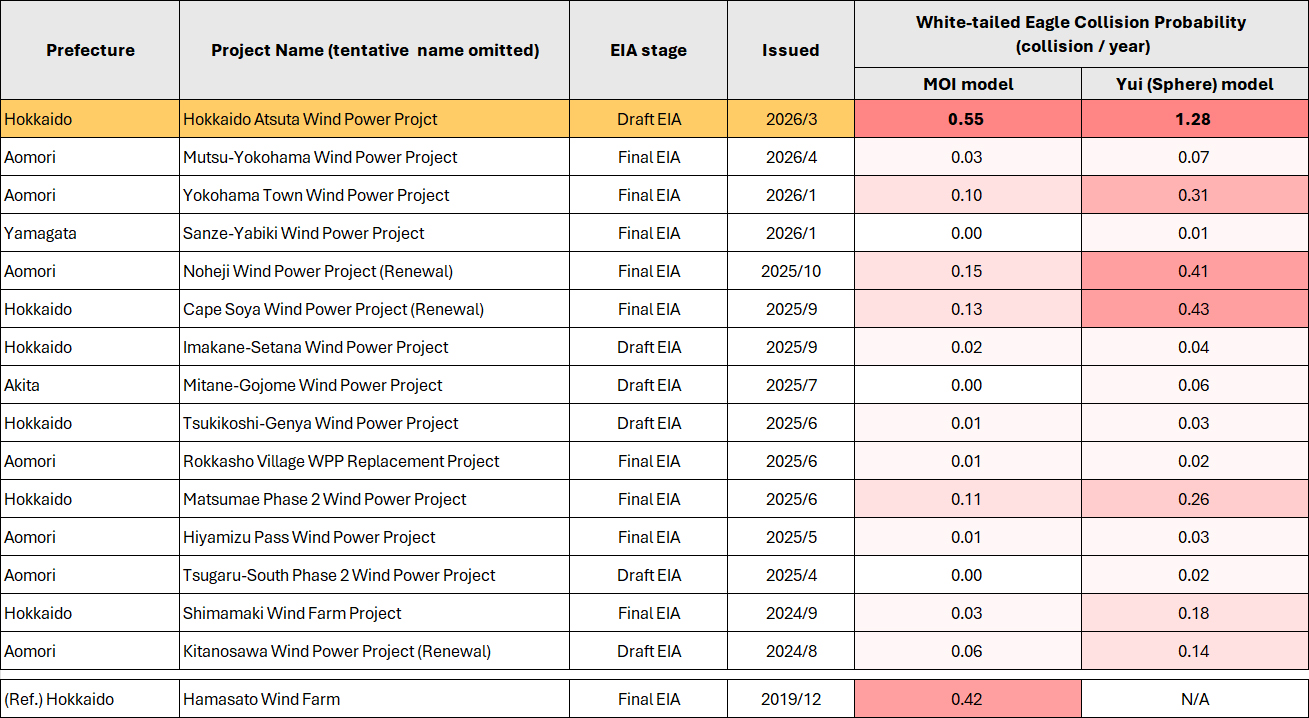
- Draft EIA: The Junbi-sho stage of the environmental Impact Assessment Process
- Final EIA: The Hyokasho-stage
- "MOI Models" refers to the collision-probability model published by Japan's Ministry of the Environment.
- "Yui (Sphere) Model" refers to the alternative collision-probability model proposed by Yui, widely used in Japan's EIA practice.
- "N/A" indicates that the value was not reported in the source of EIA document.
- Yellow highlighted is Atsuma Project, the subject of this opinion paper.
2. The project should be aligned with the wind power zoning plan by Ishikari City
The planned site is located in “Environmental Conservation Priority Area” within Ishikari Citiy’s “Wind Power Zoning Plan”. This plan was created based on a diverse perspective, including the region’s distinctive natural and social environment. The developer is attempting to push ahead with the project by rejecting these concerns based on their own research findings (such as assessments biased toward forest birds). This is an arbitrary act that disregards the wishes from local community, and it risks setting an inappropriate precedent that undermines the community-led zoning initiatives currently underway across Japan.
3. The Nature Positive framing at the planned site is nothing more than greenwashing
The developer claims that the project will contribute to achieving“Nature Positive” or “30 by 30” target and proposes nature-restoration plans on former pastureland and similar areas. However, ignoring the serious adverse effects of bird strikes on rare raptors and destroying existing grassland habitats through afforestation is completely off the mark from IUCN’s “Mitigation Hierarchy (the prioritized order for managing impacts).”
This plan, which pretends to be environmentally friendly but in reality involves destruction, is nothing more than “greenwashing.” If the goal is truly promoting “Nature-Positive” initiatives, this plan should be scrapped and a new site should be selected to minimize the impact to the environment.
Latest List
2025.12.19
Nature Positive initiative launched in Nose Town, Osaka
with support from Microsoft
In collaboration with the Foundation of Osaka Green Trust and local communities
2025.11.26
Minakami Nature Positive Project Featured as a Model Case for "The Potential of Economic Valuation of Natural Capital" by the Ministry of the Environment
2025.11.6