2023 Annual Report on the Mitsubishi Estate, Minakami Town, and NACS-J Partnership Agreement: Achievements in the Development of Quantitative Evaluation Methods
2024.6.5
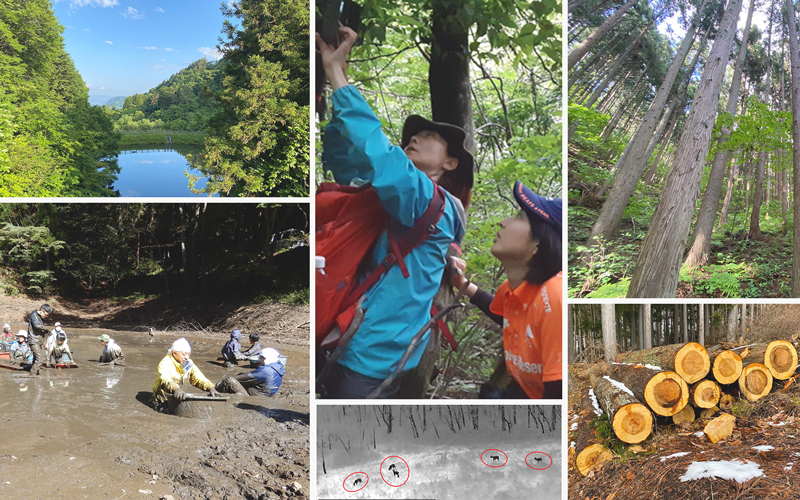
The Nature Conservation Society of Japan (NACS-J), aiming to achieve a nature-positive future, signed a 10-year partnership agreement on 27 February 2023 with Mitsubishi Estate Co., Ltd. and Minakami Town in Gunma Prefecture*. Over the past year since the agreement was signed, activities have mostly progressed as planned. Some results are already emerging, particularly in “advancing and applying quantitative evaluations of biodiversity conservation and the multi-faceted functions of nature.” The outcomes of our work in FY2023 have been summarised below.
*See post about the partnership agreement here
Under this partnership agreement, five initiatives are being implemented in Minakami Town to achieve a nature-positive future. The outcomes of FY2023 are summarised below for each initiative. Please take a look.
Contents
- 1. Conversion of artificial forests with degraded ecosystems into natural forests (Approx. 80 ha)
- 2. Conservation and restoration of biodiversity-rich Satoyama Landscapes
- 3. Achieving low-density management of sika deer populations
- 4. Implementation of Nature-based Solutions (NbS)
- 5. Advancing and applying quantitative evaluations of biodiversity conservation and the multi-faceted functions of nature
1. Conversion of artificial forests with degraded ecosystems into natural forests (Approx. 80 ha)
In this initiative, we aim to conserve and restore biodiversity by returning poorly managed artificial forests with low levels of biodiversity back to natural forests using native vegetation. The activity sites are primarily national forests and town-owned forests.
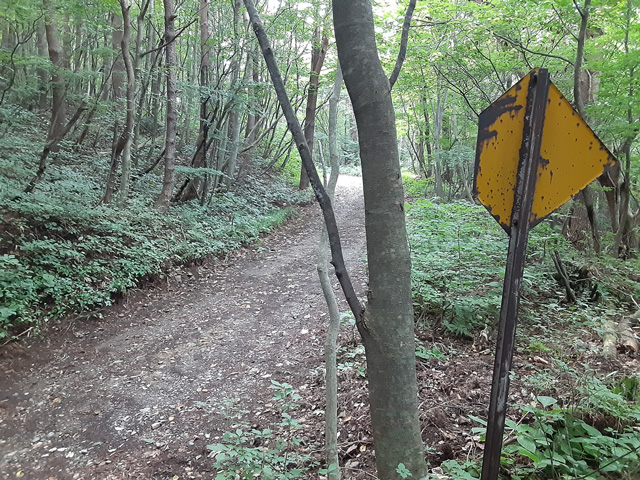
Japanese red pine forest (Before)
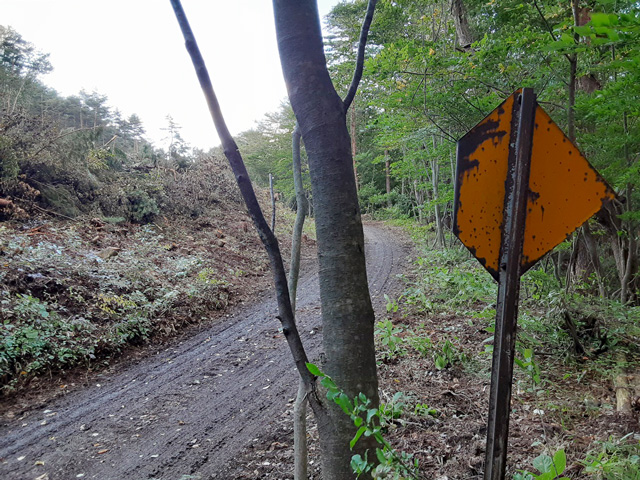
Japanese red pine forest (After)
In the projects conducted in the national forests, we collaborated on the AKAYA Project to cut down and remove approximately 0.44 hectares of artificial forest primarily consisting of Japanese red pine. A monitoring survey was also conducted on the understory vegetation prior to this.
As the area also serves as a vital feeding ground for the endangered golden eagle, the restoration of the land to natural forest is expected to improve the habitat and support the species’ conservation efforts.
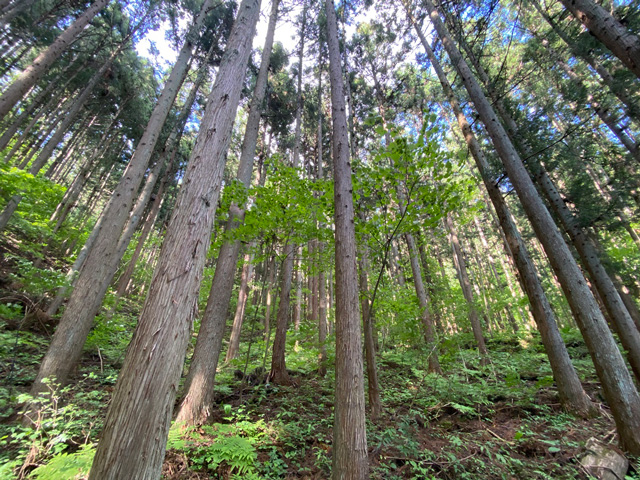
Artificial Japanese cedar forests around the former Chiba Village
In the town-owned forests, we targeted areas surrounding the former Chiba Village, where a pair of endangered mountain hawk-eagles have been sighted. Before cutting the trees down, we conducted surveys and developed a plan for natural forest restoration. It is expected that removing the poorly managed artificial forests around the former Chiba Village and creating more open space within the forest will help improve the habitat of the mountain hawk-eagle.
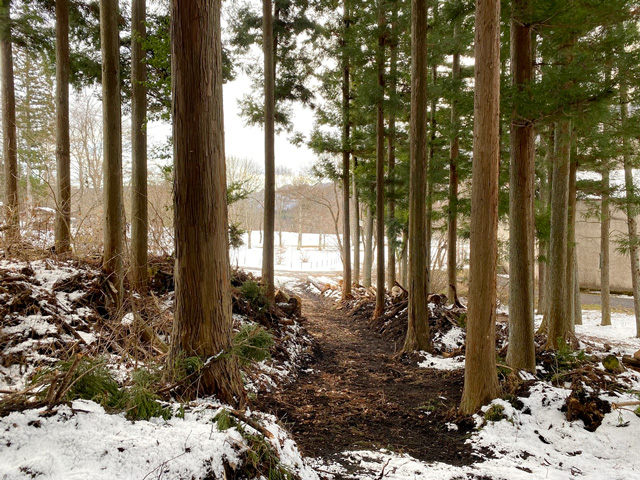
Access road built within the town-owned forest
We encountered an unexpected situation in which we had to construct an access road. Along with building this road, which stretched a total length of 400 meters, we were able to remove about 0.9 hectares of artificial forest that consisted mainly of Japanese cedar.
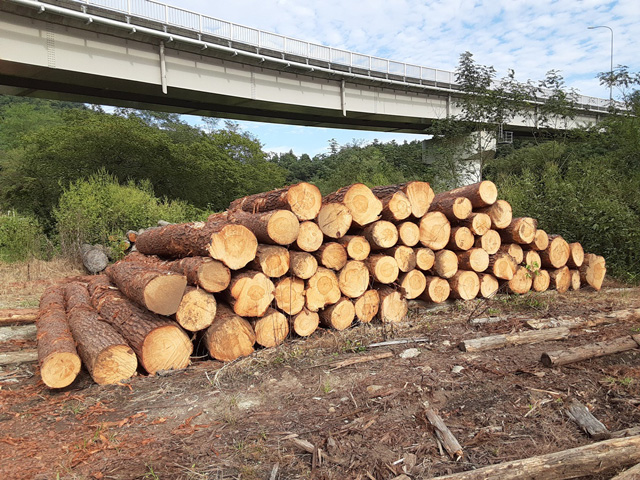
Japanese red pine removed from national forest
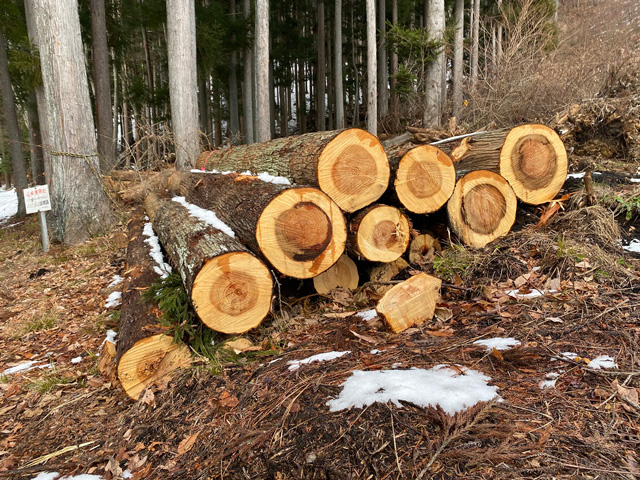
Japanese cedar removed from town-owned forest
Going forward, we will continue expanding target areas and promoting efforts to restore natural forests. We are also exploring ways to make use of the harvested timber, such as in the new elementary school under construction in Minakami Town.
2. Conservation and restoration of biodiversity-rich Satoyama Landscapes
This activity aims to conserve and restore the biodiversity of satoyama landscapes that have deteriorated due to abandoned farmland and invasive species.
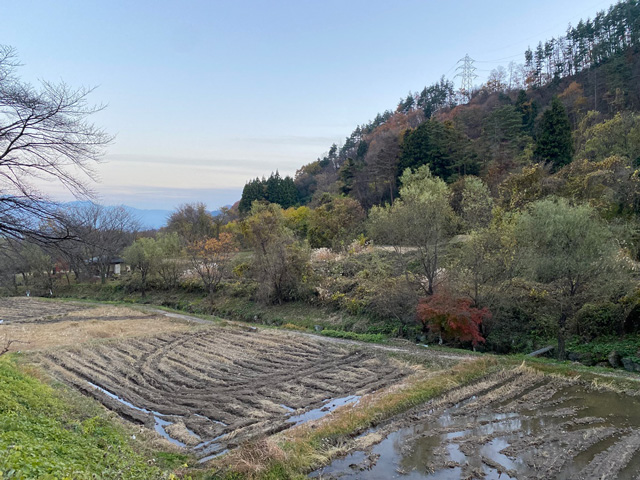
Tsukiyono Hotaru-no-sato (Firefly Village)
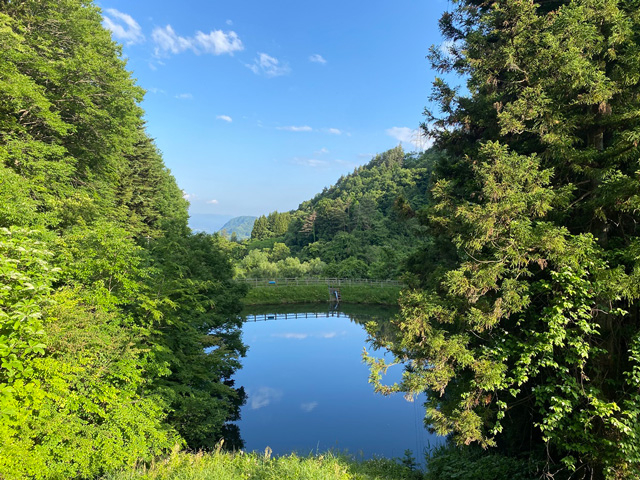
Gongen Irrigation Pond
In FY2023, we selected Tsukiyono Hotaru no Sato (Firefly Village), which is located on the west side of Jomo-Kogen Station on the Joetsu Shinkansen line, as our activity site. Preliminary monitoring surveys revealed that the ponds within the area are in an unhealthy state, with numerous invasive species such as largemouth bass and carp inhabiting them.
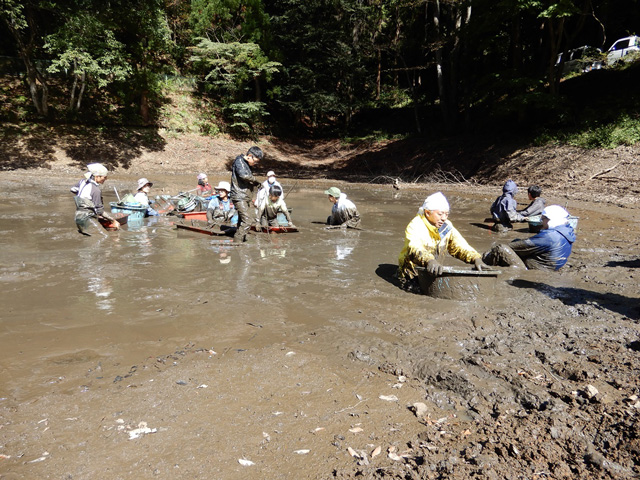
Kaibori
On 14 October 2023, kaibori, a traditional Japanese method to maintain ponds, was carried out at one of the ponds (Gongen Kami-ike) inside the target area as part of the biodiversity conservation and restoration efforts. To also increase public awareness about kaibori, local residents of Minakami Town were invited and over 50 people participated.

Captured Largemouth Bass and Carp
Several largemouth bass (designated invasive species by MoE) and carp specimens were captured and removed from the pond. In comparison to the 66 invasive largemouth bass that were captured, only 2 native specimens, both dragonfly larvae, were sighted. This result clearly shows that invasive species are preying on native wildlife and severely damaging the ecosystem.
Continued and effective conservation efforts are crucial for the rich biodiversity of Satoyama landscapes. Moving forward, we plan to continue our activities in the Tsukiyono Hotaru-no-sato area according to a restoration plan based on the results of FY2023. Additionally, we also hope to expand our target areas.
3. Achieving low-density management of sika deer populations
This project aims to achieve low-density management of sika deer populations, which are increasing rapidly both in Minakami Town and all over Japan.
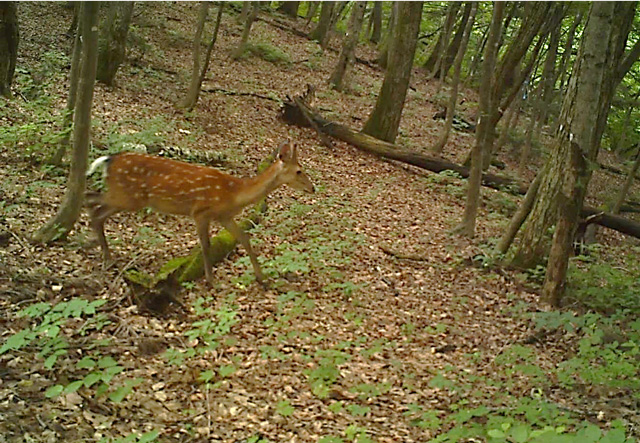
Sika deer photographed in Minakami Town
In FY2023, five surveys (sensor camera, GPS, feeding traces, fecal matter, drone) were implemented to clarify the current situation of the sika deer population in Minakami Town.
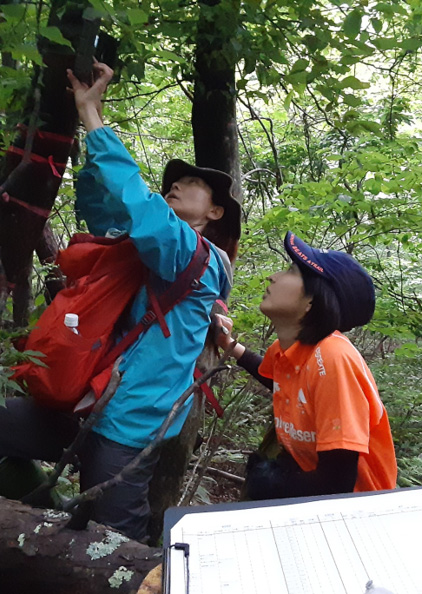
Sensor camera
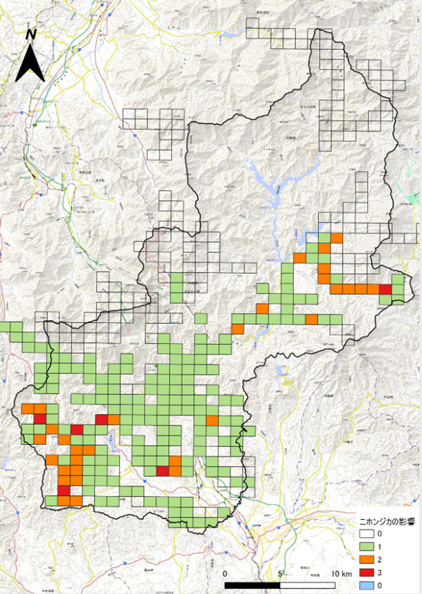
Results of vegetation survey
The current situation of the sika deers in Minakami Town was made clear through these surveys. Moreover, it was revealed that even in Minakami Town, where it is said to have a relatively low density of deer, there are areas in which the populations are quite concentrated.
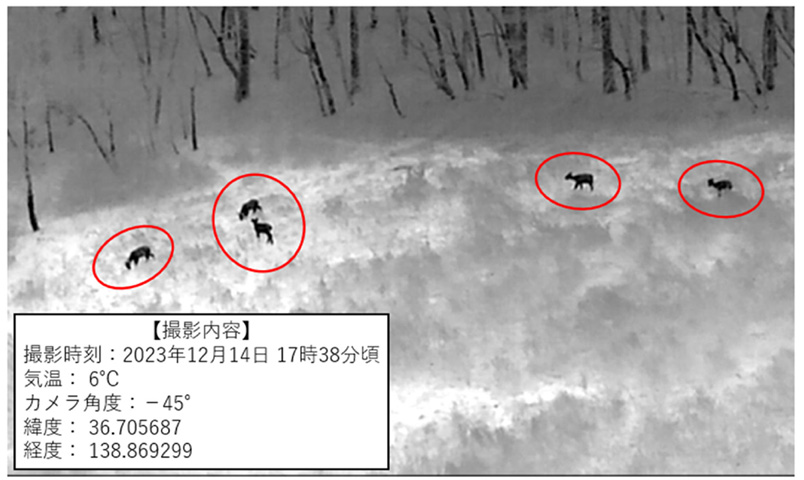
Sika deer photographed during the drone survey
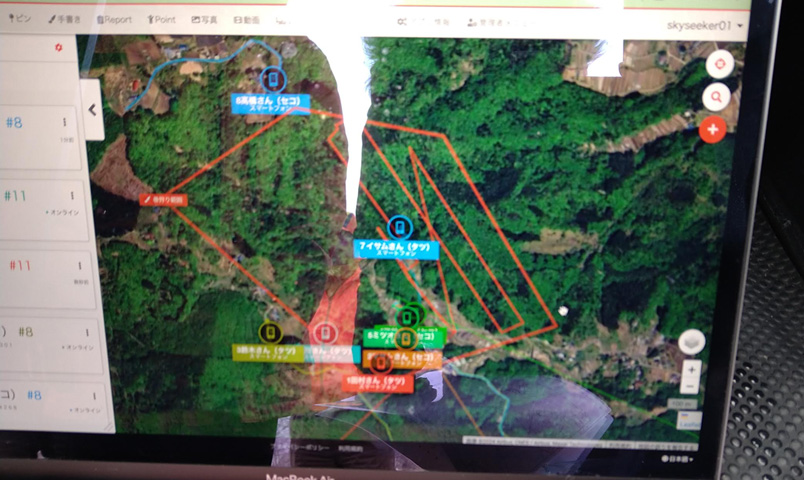
Visualisation deer and hunters when using drones to capture deer
Based on the survey results, we experimented with using drones in capturing deer in high-density areas. While there are still problems that need to be solved to develop an effective capture method in low-density areas, we also worked on a master plan, a “Minakami Model,” to achieve low-density management of sika deer populations.
4. Implementation of Nature-based Solutions (NbS)
This initiative aims to assess how closely the biodiversity conservation activities implemented by the three parties (conversion of artificial forests into natural forests, conservation of satoyama landscapes, low-density management of sika deer) align with NbS standards. Should gaps be identified, improvement measures will be considered and incorporated into future activities.
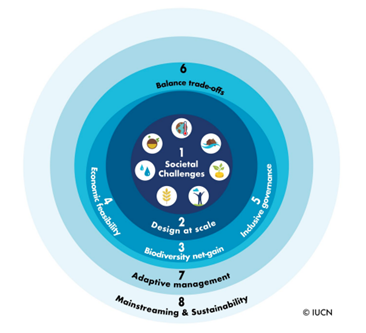
In FY2023, a series of consultations were held with the International Union for Conservation of Nature (IUCN), which advocates for NbS, and an evaluation was conducted using the “NbS Self-Assessment Tool” developed by IUCN. The results indicated an NbS alignment score of 30%. Globally, an NbS alignment score of 75% or higher is regarded as a high standard. While a considerable gap remains to reach this level, the assessment enabled the development of concrete strategies to bridge the gap and established a foundation for initiating practical actions toward addressing the identified challenges.
5. Advancing and applying quantitative evaluations of biodiversity conservation and the multi-faceted functions of nature
This initiative aims to examine methods for quantitatively evaluating the outcomes of biodiversity conservation activities expected from the efforts of the three stakeholders, as well as the biodiversity of Minakami Town, the multi-faceted fuctions of nature, and ecosystem services. Based on objective evaluations, the project seeks to promote and advance these activities effectively.
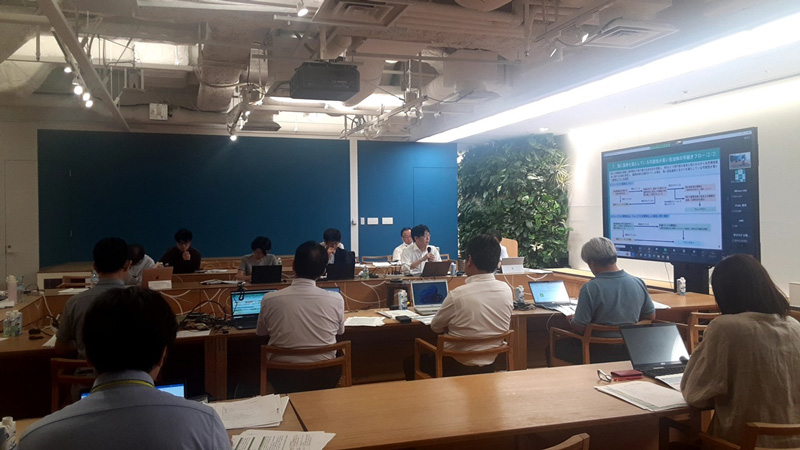
Working Group
In FY 2023, the initiative began with the establishment of a working group composed of leading Japanese experts in the natural and social sciences, with the aim of ensuring that Japan’s biodiversity characteristics and scientific rigor are properly reflected.
- NAKASHIZUKA Tohru
- Director General, Forestry and Forest Products Research Institute (FFPRI);
Professor Emeritus, Tohoku University - TSUCHIYA Toshiyuki
- Director General, Forest Economic Research Institute;
Professor Emeritus, Tokyo University of Agriculture and Technology - ISHII Minoru
- President, Research Institute of Environment, Agriculture and Fisheries, Osaka Prefecture;
Professor Emeritus, Osaka Prefecture University - NISHIRO Atsushi
- Deputy Director, Center for Climate Change Adaptation, National Institute for Environmental Studies
Development of Six Evaluation Methods to Measure Contributions to Biodiversity Conservation Activities
As a result of deliberations conducted by the working group, six evaluation methods have been developed that enable objective and quantitative assessment of how biodiversity conservation activities contribute to the achievement of the Kunming–Montreal Global Biodiversity Framework (hereafter, GBF), a new international target for nature-positive outcomes, as well as to the biodiversity goals set by individual municipalities.
Details of the Six Evaluation Methods
| 1. Assessment of Areas of Importance Through expert interviews and review of existing literature, locations that are important for biodiversity conservation within a region are assessed from the perspectives of rarity, threat status, complementarity, and connectivity of biodiversity. For example, this method can be used to evaluate whether corporate operational sites or areas where biodiversity conservation activities are conducted (hereafter, activity sites) are located in areas of high biodiversity importance. Identifying such important areas is also positioned as a first essential step in the LEAP approach recommended by Taskforce on Nature-related Financial Disclosures (TNFD). |
| 2. Species Distribution Modeling Potentially occurring species (plants, birds, and insects) within a region are statistically predicted and evaluated using nationwide species distribution data based on governmental environmental surveys, together with information on topography, climate, and land use. For example, this method enables quantitative evaluation of the ecological quality of corporate operational or activity sites. |
| 3. Gap Analysis of Important Areas Risks from development or other pressures in areas important for biodiversity are assessed based on the presence or absence of conservation safeguards. For example, when companies seek to contribute to the 30by30 target by registering sites under the Ministry of the Environment’s Nature Symbiosis Sites program, this analysis enables the selection of locations that are most effective from a biodiversity conservation perspective. |
| 4. Groundwater Recharge and Carbon Sequestration Volume Among the various ecosystem services, groundwater recharge and carbon sequestration volumes are estimated and evaluated at a 100-meter grid scale using information on land use, vegetation types, and climatic conditions1. Groundwater recharge volume refers to the annual amount of rainfall that infiltrates soil and becomes groundwater, while carbon sequestration volume refers to the annual amount of carbon dioxide captured by above-ground vegetation. For example, this method allows assessment of the current groundwater recharge and carbon sequestration capacities of corporate operational or activity sites, and the results can also be applied in the contexts of climate change mitigation, disaster risk reduction, and resilience planning. |
| 5. Ecosystem Type Classification Analysis Regional natural environments are classified into a small number of ecosystem types, such as wetlands and secondary forests, and ecosystem diversity within the region is evaluated. These results can be used to support more effective biodiversity conservation activities at corporate operational or activity sites. The TNFD also requires assessment of corporate impacts on nature by ecosystem type. |
| 6. Alignment with the IUCN Global Standard for Nature-based Solutions (NbS) Biodiversity conservation activities are evaluated in terms of whether they also contribute to addressing local social challenges, such as climate change, natural disasters, and human health, based on the IUCN Global Standard for Nature-based Solutions (NbS). Globally, achieving nature-positive outcomes increasingly emphasises solving social challenges through nature while conserving biodiversity at the same time. This evaluation makes it possible, for example, to improve corporate biodiversity conservation activities from an NbS perspective. |
1:Groundwater recharge and carbon sequestration volumes are calculated based on the J-ADRES (Japan’s Assessment of land use based on Disaster Risk and Ecosystem Services) framework developed under the Eco-DRR Project of the Research Institute for Humanity and Nature.
Evaluation Results and Biodiversity Conservation Activities Implemented in Minakami Town
The six evaluation methods described above are applicable not only to activities in Minakami Town, but also to biodiversity conservation initiatives across Japan. Presented below are selected examples of the evaluation results and biodiversity conservation activities conducted in Minakami Town in FY 2023 through collaboration among the three parties, provided as sample outcomes.
Evaluation Results and Biodiversity Conservation Activities in Minakami Town (Selected Highlights)
1. Assessment of Areas of Importance
|
2. Species Distribution Modeling 1
|
3. Gap Analysis of Important Areas
|
4. Groundwater Recharge and Carbon Sequestration Volume
|
5. Ecosystem Type Classification Analysis 2
|
6. Alignment with the IUCN Global Standard for Nature-based Solutions (NbS) 3
|
1: Species distribution modeling was conducted using MaxEnt, predicting the distribution of 2,409 species (857 plant species, 119 bird species, and 1,433 insect and spider species) within Minakami Town. Species distribution modeling was also completed for each identified important area. For the training data, species distribution data (such as museum specimen data) from Ishikawa to Niigata Prefecture on the Sea of Japan side, as well as Gunma Prefecture, were used.
2: Ecosystem type classification used vegetation maps from Japan’s 6th and 7th National Surveys on the Natural Environment and reclassified approximately 110 vegetation types into eight ecosystem categories.
3:NbS alignment was evaluated using the IUCN NbS self-Assessment tool, assessing project plans under the partnership agreement across eight major criteria and 27 sub-criteria.
These outcomes represent the achievements of FY 2023. The five ongoing initiatives implemented by the three parties are collectively titled the Minakami Nature Positive Project (Minakami NPPJ), which has now entered its second year. We invite you to continue following its progress.
Corporate × Nature Conservation Society of Japan: Promoting Biodiversity Conservation Through Collaboration
The activities of the Nature Conservation Society of Japan are supported by membership fees and donations. We are seeking companies and organizations willing to support and collaborate with us. Why not work together with the Japan Nature Conservation Society to advance biodiversity conservation?
Latest List
2025.12.19
Nature Positive initiative launched in Nose Town, Osaka
with support from Microsoft
In collaboration with the Foundation of Osaka Green Trust and local communities
2025.6.13
Human Depopulation May Lead to Biodiversity Loss
Findings from a Big Data Analysis of 158 Satoyama and Rural Areas Across Japan
2025.5.21